Easter Traditions Around the World: Pussy Willows, Water Fights, and… Growing Eggs on Trees?
For some, it’s a celebration of spring; for others, a long weekend; and for some, a strategic mission on how to survive the pomlázka (traditional Czech Easter whip) 😄 However you celebrate, one thing is certain: Easter takes on many forms across the globe. In some places, water is poured over people; in others, trees are decorated with eggs; and in some, a completely different animal might run up to you instead of a little bunny. Let’s take a look at how Easter is celebrated around the world and what is eaten during the festivities (because that’s probably what interests us the most 😉).
Czech Republic: Traditions that (Might) Hurt but Taste Great
Let's start at home. Czech Easter is a blend of customs that seem completely normal to us… but often surprise foreigners. The pomlázka, caroling, and coloring eggs are classics. According to tradition, the pomlázka is supposed to bring women health and youth. Sometimes, though, it’s more like a quick sprint to the door 😄 On the table, however, coziness reigns:
- Mazanec with almonds (a sweet yeast bread)
- Sweet jidášky ("Judas buns")
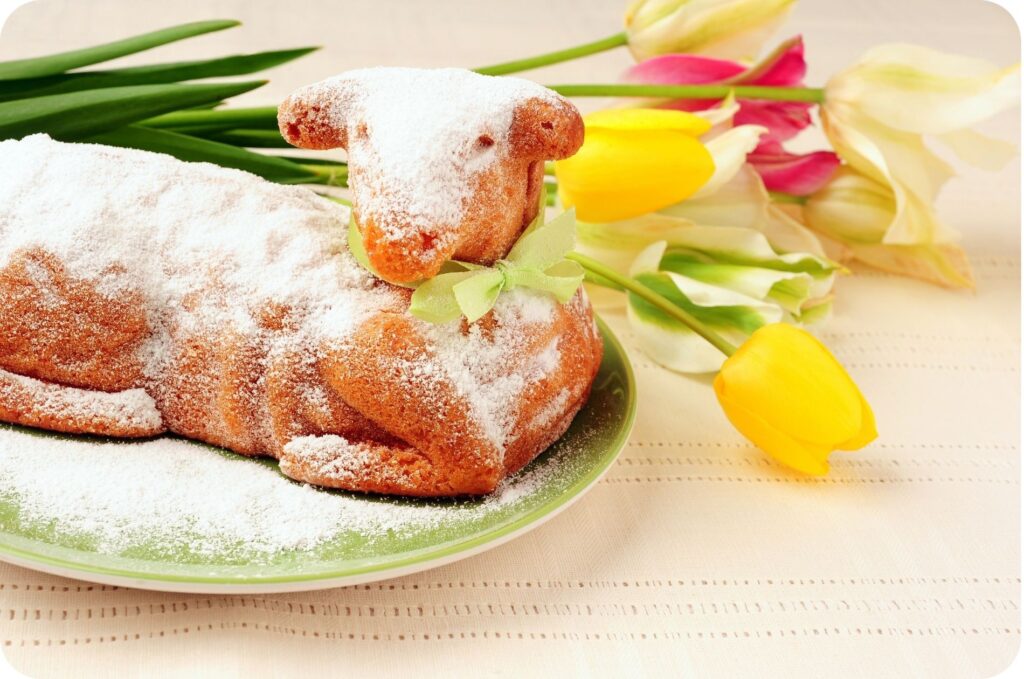
- Velikonoční beránek (Easter lamb cake) And exactly here is where what we love most about Easter begins - the smell of fresh baked goods and sweets that simply belong to spring.
Slovakia: When the Pomlázka Isn't Enough, Add Water
In Slovakia, they decided that one tradition wasn't enough, so they "improved" it a bit. Besides the pomlázka, women are also doused with water, sometimes very thoroughly. The symbolism is clear: health, freshness, and a new beginning. Spare clothes recommended 😄
Poland: Śmigus-Dyngus, or a Water War with No Rules
The Poles have taken the tradition even further. Easter Monday is known as Śmigus-Dyngus - a day when dousing with water transforms into a regular water battle. It's not just about symbolism but genuine fun. The streets are full of laughter and playfulness.
Germany: When Eggs Grow on Trees
In Germany, something that looks like an Easter version of a Christmas tree might surprise you. "Ostereierbaum" are branches decorated with colorful eggs. Simple, beautiful, and extremely photogenic. On the table, you'll then find sweet pastries similar to mazanec and the traditional lamb cake.
Italy: Easter = Food, Family, and Even More Food
Italians take food seriously. And Easter? That's their moment to shine. A typical dessert is Colomba di Pasqua - a sweet cake in the shape of a dove. Fluffy, delicate, and ideal with coffee (or the third coffee of the day). And then there are the family lunches, which are long, loud, and full of great food. So, basically perfect.
France: When Eggs are Brought by Bells
Forget about the little bunny. In France, they have a different story. According to tradition, Easter bells fly away to Rome and, upon their return, "bring" chocolate eggs. Does it sound a bit like a marketing move? Maybe. Does it work? Definitely 😄
Great Britain: Small Buns, Big Tradition
The British have their hot cross buns - sweet buns marked with a cross. They are eaten on Good Friday and combine spices, raisins, and a soft dough. Something between a dessert and breakfast that you'll gladly have anytime.
Spain: Easter that You Can Feel
The streets fill with spectacular processions; people carry huge statues, music plays, and the entire atmosphere is... almost jarringly powerful. It's not just a tradition; it's an emotion that draws you in, even if you are not a believer. And although you might expect mountains of sweets, the Spanish do it differently. Easter here is more about the experience than the sugar. But that doesn't mean eating isn't a priority. Torrijas, for example, are typical something like sweet toasts soaked in milk, honey, or wine.
Australia: The Bunny Has Competition
Australians have a problem with rabbits; they are considered pests there. So, they came up with an alternative: the bilby - a cute animal that has become an Easter symbol.
USA: Egg Hunting as a Sport
In America, Easter is mainly about family and fun. The most well-known tradition? Easter egg hunt - searching for hidden eggs. Kids run, parents try to keep up, and the winner gets chocolate 😄
And How Does Easter Taste with Us?
Whether you're inspired by Italy, Germany, or perhaps Australia, one thing remains the same: Easter is mainly about joy, sharing, and good food. And that's exactly what you'll find here 💛 This year, we've made sure everyone can really choose:
- Jidášky - traditional sweet yeast dough pastry
- Mazanec with almonds - fluffy with a crunchy crust
- Carrot cupcakes with eggs - moist and playful
- Mechová roláda (Moss Roll) - a spring classic you love
- Easter cake pops - chickadees 🐥
- Colorful Easter brownies with eggs
- Poppy seed linzer cookies with lemon curd - fresh and slightly untraditional
- Mini Easter cheesecakes (also in a gluten-free version)
- Easter macarons - chickadees Whether you're planning a visit, looking for something for the table, or just want to make yourself happy… we're in this with you 😉
A Small Tip in Conclusion Feel free to borrow a tradition from another country this year:
- decorate branches like in Germany
- try a new dessert inspired by Italy
- or have a USA-style family brunch
And above all, enjoy it. Because that's what Easter is actually all about 💛